
The Indian education landscape is undergoing a seismic shift. If you are a parent or a student under the CBSE board, the 2025-26 academic session is not just another year—it is the year of the "Great Reset."
The Central Board of Secondary Education (CBSE) has rolled out what experts are calling the most significant overhaul in decades. Gone are the days of pure rote memorization. The new focus? Competency, Flexibility, and Future-Readiness.
At Paathshala, we have always believed in teaching teachers to teach for understanding, not just for exams. These new reforms align perfectly with our core values of Curiosity and Scientific Temper. But what exactly has changed? Here is a breakdown of the 10 major reforms you need to know.
The 10 Major CBSE Reforms for 2025-26
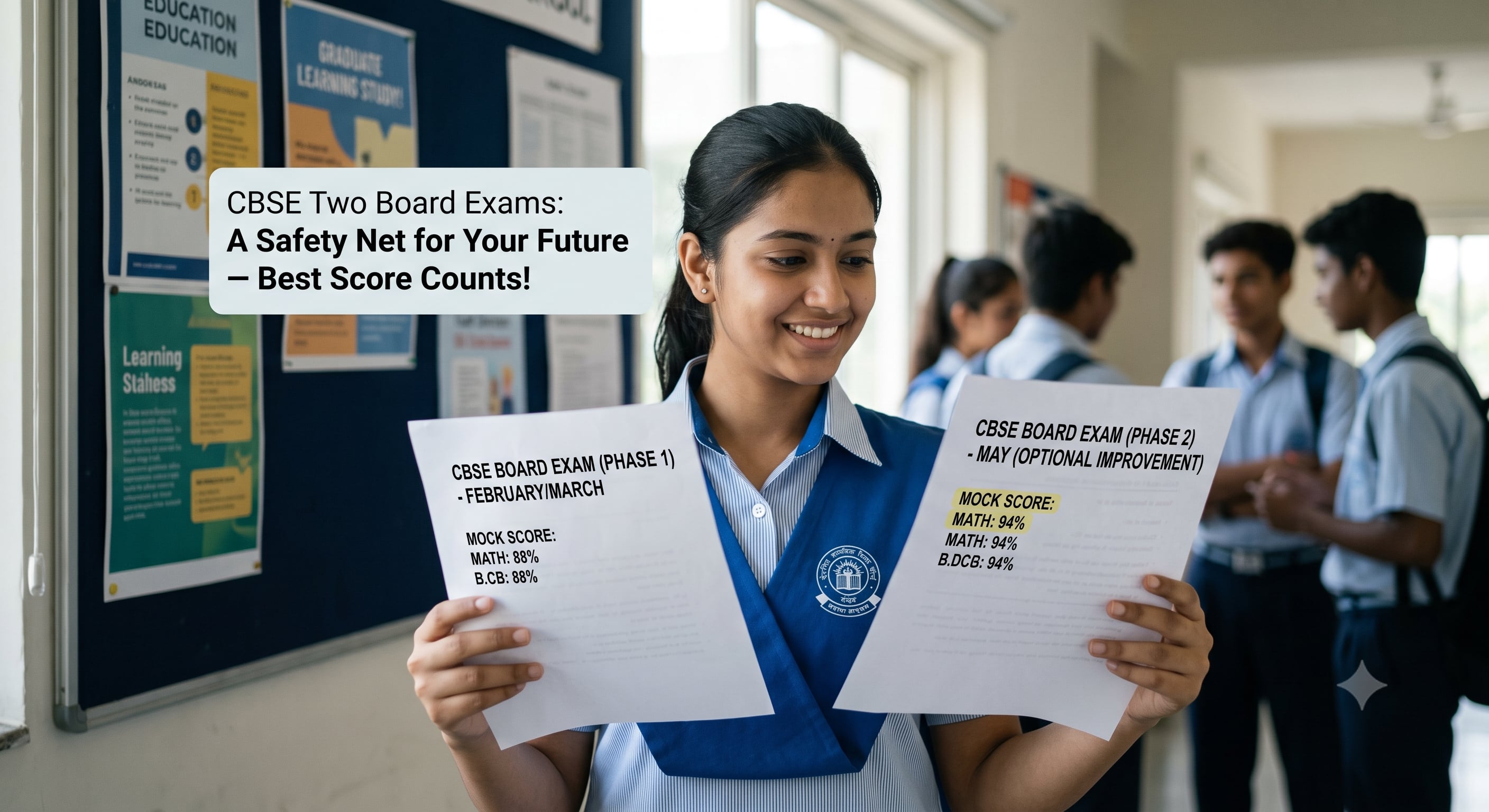
1. Dual Board Exams (Biannual Boards) Starting from the 2026 board exams (2025-26 session), Class 10 students will likely have the option to sit for board exams twice a year (Jan/Feb and April). The best score will be retained. This massive move aims to reduce the "do or die" pressure of a single exam day.
2. Competency-Based Questions Take Center Stage Rote learning is officially out. At least 50% of the questions in Class 10 and 12 exams will now be competency-based. These include MCQs, case-based reasoning, and source-based questions that test application, not just memory.
3. Increased Weightage for Internal Assessment Reports indicate a significant shift towards continuous evaluation, with internal assessments (projects, periodic tests, portfolios) potentially carrying up to 40% weightage in the final score. This means performance throughout the year matters more than ever.
4. Section-Wise Question Papers For Class 10 Science and Social Science, question papers will now be strictly divided into sections (e.g., Physics, Chemistry, Biology). Students must write answers in the specific section; mixing them up could lead to mark deductions.
5. Subject Flexibility in Class 11 A huge relief for students! If you took Basic Math in Class 10, you can now opt for Standard Math in Class 11. This removes the rigid barrier that previously stopped students from pursuing engineering or math-heavy fields if they chose Basic Math earlier.
6. Expansion of Skill-Based Subjects CBSE is doubling down on vocational skills. New subjects like Artificial Intelligence, Design Thinking, and Data Science are being integrated. At Paathshala, we are already ahead of the curve, offering specialized online classes in these very fields.
7. "Best of 5" with Skill Subjects If a student fails in a core subject (like Science or Math) but passes in a Skill Subject (like AI), the skill subject marks can replace the failed core subject marks for the final percentage calculation.
8. 9-Point Grading System The board is moving towards a positional grading system (A1 to E) based on the performance of the batch, rather than just absolute marks, to reduce the unhealthy race for "99.9%."
9. Strict Attendance & Digital Hygiene 75% attendance is mandatory, with stricter monitoring. Additionally, the new "APAAR ID" (One Nation, One Student ID) will be mandatory for board registrations, creating a permanent digital academic record.
10. Reduction in Syllabus Load While no new chapters were deleted this year, the content load within chapters has been rationalized to make space for critical thinking and interdisciplinary projects.
How Paathshala Helps You Navigate These Changes
These reforms are exciting, but they can also be intimidating. A traditional "tuition class" that focuses on memorizing answers will no longer work. You need a partner that adapts to this new reality.
Here is how Paathshala aligns with the New CBSE:
-
Competency-Over-Rote: Our teachers are trained to focus on the "Why" and "How." We don't just teach you to solve a sum; we teach you the logic behind it, which is exactly what the new competency-based questions require.
-
Flexible Learning for Dual Boards: With exams potentially happening twice a year, you need a study schedule that adapts to your timeline. Our platform lets you choose your teaching day and pace.
-
Skill Subjects Support: Looking for an artificial intelligence class online or coding help? We have expert educators ready to help you score high in these crucial skill subjects.
-
Values That Matter: Our core values of Empathy and Sustainability ensure that we support the student's mental well-being, moving away from exam stress toward genuine learning.
📲 Join the Future of Learning
Don't let the new changes catch you off guard. Prepare with teachers who understand the future of education.
Download the Paathshala App today for interactive lessons that kids actually enjoy.
👉 Download for Android: Click Here
👉 Download for iOS: Click Here
Are you a teacher ready to teach the new curriculum? We are looking for you! Send your resume to apeksha.negi@safwhigre.com and join our mission to redefine education.
[CBSE new exam pattern 2026, CBSE board exam 2026 news, CBSE dual board exams, competency based questions CBSE, CBSE syllabus 2025-26, CBSE class 10 board exam 2026, CBSE internal assessment changes, online tuition for CBSE new pattern, CBSE latest news, Paathshala CBSE app]